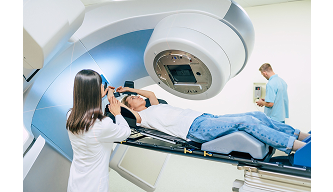
“I Survived Breast Cancer—Radiation Was My Silent Shield.”
Healthcare International Is Transforming Radiation Therapy for Breast Cancer.
What Every Woman Needs to Know About Radiation Therapy After Surgery:
For many women battling breast cancer, the hardest part isn’t the surgery—it’s what comes next.
You’ve had the lump removed. Or maybe even your entire breast.
You’ve asked the question: “Did they get it all?”
That’s where radiation therapy steps in—not as a second blow, but as a powerful, invisible shield against recurrence.
Healthcare International specializes in precision-driven, patient-friendly radiation therapy—tailored to treat the cancer while protecting the woman behind the diagnosis.
What Is Radiation Therapy for Breast Cancer?
Radiation therapy uses high-energy beams (like X-rays or protons) to destroy any remaining cancer cells in the breast, chest wall, or lymph nodes—after surgery.
It’s commonly used:
- After Breast-Conserving Surgery (BCS)to prevent recurrence
- After mastectomy, especially if lymph nodes were involved
- Occasionally before surgery to shrink tumors
It’s not painful. It doesn’t make you radioactive. And in most cases, you keep living your normal life.
Types of Radiation Therapy Offered at HCI
- External Beam Radiation Therapy (EBRT)
- The most common type
- Targets breast area daily over 3–6 weeks
- Delivered with high-precision linear accelerators (LINAC)
- 3D Conformal Radiation Therapy (3D-CRT)
- Shapes beams to your anatomy
- Reduces radiation to healthy organs like the heart and lungs
- Intensity-Modulated Radiation Therapy (IMRT)
- Customizes beam intensity
- Ideal for complex cases or close-to-critical areas
- Intraoperative Radiation Therapy (IORT)
- Delivered during surgery
- One single dose, no need for 5-week treatment
- Perfect for selected early-stage cases
Who Needs Radiation?
You may be prescribed radiation if:
- You had breast-conserving surgery (lumpectomy)
- Cancer had spread to lymph nodes
- Tumor was large or aggressive
- Margins were close or unclear
A radiation oncologist at HCI Network will review your full case to decide.
Side Effects (and Why You Shouldn’t Fear Them)
Most women tolerate radiation well. Common effects include:
- Skin redness (like sunburn)
- Fatigue
- Temporary swelling or tenderness
- Minor changes in skin tone
With modern tech and expert planning, serious complications are rare.
HCI Team uses image-guided planning, breath-hold techniques, and AI-powered contouring to protect your lungs, heart, and quality of life.
Why International Patients Choose HCI for Radiation
- Board-certified radiation oncologists
- State-of-the-art LINAC and IMRT units
- Affordable without compromise
- Dedicated oncology nursing & skin care support
- Holistic recovery: yoga, counseling, diet planning
We also provide:
- Remote radiation planning for overseas patients
- Coordinated care after surgery abroad
- Quick visa, hotel & interpreter support
Real Voices from Our Patients
“I flew from UAE. I got 25 radiation sessions done in 5 weeks. No burns. No side effects. I even went sightseeing between sessions!”
— Jasmeen A., 38, breast cancer survivor
Radiation Isn’t the End—It’s Your Protection for the Future
If your doctor recommends radiation, it’s not because they fear a return of cancer.
It’s because they’re working to make sure it never comes back.
Call, Message or WhatsApp us for appointments.
Healthcare International, your trusted partner for the best medical treatments.