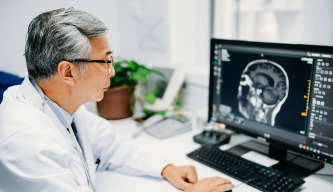
Healthcare International is Transforming Treatment for Brain Tumour.
Brain tumors are often silent at first. A few headaches. Some memory slips. Occasional vision trouble.
But behind those subtle signs, something serious might be growing.
At Healthcare International (HCI), we believe early and accurate diagnosis is the single most important step in saving lives and preserving brain function. This blog will help you understand how brain tumors are diagnosed, and when you should seek medical attention.
Why Diagnosis Is Often Delayed
Many symptoms of brain tumors mimic other common conditions:
- Migraine headaches
- Stress or anxiety
- Hormonal imbalances
- Vertigo or inner ear problems
That’s why a neurological exam and brain scan should be considered early if symptoms persist or worsen.
“Early diagnosis of a brain tumor can mean the difference between a curable case and an inoperable one.”
— Consultant Neurologist, HCI
Step-by-Step: How a Brain Tumor Is Diagnosed
-
Medical History & Symptom Review
A detailed consultation with a neurologist includes:
- Headache pattern and severity
- Seizure history
- Memory, balance, vision, or speech issues
- Family history of cancer or genetic conditions
-
Neurological Examination
The doctor checks:
- Reflexes and coordination
- Muscle strength
- Eye movement and pupil reaction
- Balance and gait
- Mental status and language skills
Any abnormal findings are followed up with imaging tests.
-
Imaging Tests for Brain Tumors
MRI (Magnetic Resonance Imaging)
- Gold standard for brain tumor detection
- Shows tumor size, location, and spread
- With contrast dye (gadolinium) to highlight tumor tissue
At HCI, we use 3T MRI with functional and diffusion-weighted imaging for higher clarity.
CT Scan (Computed Tomography)
- Useful in emergency settings
- Detects bleeding, swelling, or calcified tumors
- Often used when MRI is not available or contraindicated
PET-CT Scan
- Evaluates metabolic activity of tumors
- Differentiates between active tumor and scar tissue
- Helps identify metastasis from cancers like lung or breast
Functional MRI (fMRI)
- Maps brain areas responsible for speech, movement, memory
Crucial before surgery to avoid damaging key brain regions
-
Biopsy: Confirming the Diagnosis
If imaging suggests a tumor, a biopsy is done to determine the type and grade.
Types of Biopsies:
- Stereotactic Needle Biopsy – For deep or inoperable tumors
- Open Biopsy (Craniotomy) – Often combined with tumor removal
- Liquid Biopsy (in research) – Tests cerebrospinal fluid or blood for tumor DNA
The sample is sent to pathology for:
- Histological grading (WHO Grade I–IV)
- Molecular & genetic profiling (IDH mutation, MGMT, 1p/19q, etc.)
Genetic markers guide targeted therapy and prognosis.
-
Additional Tests
Depending on the case, you may also need:
- Spinal tap (Lumbar Puncture) – To check for cancer in cerebrospinal fluid (especially in children or lymphoma)
- Vision and hearing tests
- Endocrine tests if pituitary gland is involved
Summary: Diagnostic Tools at HCI
| Tool | Purpose |
| MRI / fMRI | Structure, size, and function mapping |
| CT Scan | Initial detection, bone, bleeding |
| PET-CT | Metabolic activity and spread |
| Biopsy & Histology | Confirm tumor type and grade |
| Molecular Testing | Guide treatment & assess prognosis |
Why Choose HCI for Brain Tumor Diagnosis?
- State-of-the-art neuroimaging and diagnostics
- Rapid access to MRI + PET-CT + biopsy under one roof
- Brain tumor board of neurosurgeons, radiologists, and oncologists
- Affordable packages for global patients
- International second opinions with image review
- Full work-up completed in 3–5 days
“We don’t just diagnose the tumor. We study its behavior, location, genetics—and map the safest way to treat it.”
—Director of Neuro-Oncology, HCI
Patient Experience with Healthcare International:
Marie from Ivory Coast struggled with severe migraines for months, believing they were just stress-related. Healthcare International Team’s, advanced scans revealed a brain tumor that had gone unnoticed. “We finally understood the real cause of her pain, and the accurate diagnosis gave us hope and a clear path forward,” her family shared.
If you—or someone you love—has ongoing symptoms like unexplained headaches, seizures, or personality changes, don’t brush them off. A quick scan could save a life.
Call, Message or WhatsApp us for appointments.
Healthcare International, your trusted partner for the best medical treatments.