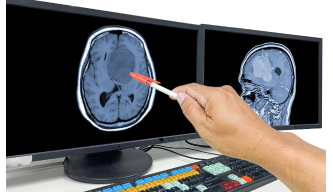
“They Told Me It Was a Tumor—But Not Cancer.”
Healthcare International is Transforming Treatment for Brain Tumour
Not all brain tumors are cancer.
In fact, one of the most common types is benign — and often treatable with surgery or non-invasive techniques. It’s called a meningioma.
At Healthcare International (HCI), we treat hundreds of patients every year from across Africa, South Asia, and the Gulf region with this exact diagnosis. And while the word “tumor” is scary, meningiomas don’t have to be.
In this blog, we break down everything you need to know about meningiomas — in simple, clear, and reassuring language.
What Is a Meningioma?
A meningioma is a tumor that arises from the meninges, the protective layers covering the brain and spinal cord.
- 90% of meningiomas are benign (non-cancerous)
- They grow slowly
- Most are single tumors, though some people may have multiple
- They’re more common in women (especially after age 40)
- Often diagnosed incidentally on brain scans done for headaches or dizziness
Meningiomas don’t start in the brain, but can press on brain tissue as they grow.
How Common Are Meningiomas?
- Most common primary brain tumor in adults
- Account for ~30% of all brain tumors
- Found more frequently in middle-aged and older adults
- Often asymptomatic in early stages
Symptoms of Meningioma
Symptoms depend on the tumor’s size and location. Many are asymptomatic for years.
When symptoms appear, they may include:
- Persistent headaches
- Blurred or double vision
- Hearing loss or ringing in the ear (acoustic meningioma)
- Weakness in arms or legs
- Seizures (especially new-onset in adults)
- Memory problems or personality changes
- Trouble with speech or balance
Don’t ignore new or unexplained neurological symptoms. A simple MRI could detect a treatable tumor.
How Is Meningioma Diagnosed?
At HCI, we use a thorough and advanced diagnostic approach:
- MRI with contrast – Best imaging to visualize location, size & effect on brain
- CT Scan – Useful for calcified tumors or skull involvement
- Functional MRI / Neuro-navigation – Used before surgery for tumors near speech/motor areas
- PET-CT (in select cases) – To assess metabolic activity
- Biopsy or Surgical Resection – For confirmation of tumor type and grade
Treatment Options for Meningioma
Not all meningiomas need immediate treatment.
Observation (“Watch and Wait”)
- Suitable for small, slow-growing, asymptomatic tumors
- Regular follow-up with MRI (every 6–12 months)
Surgery
- Primary treatment for symptomatic or growing tumors
- Goal: complete tumor removal (called “gross total resection”)
- Safe and effective in majority of cases
- Minimally invasive or open depending on location
Radiation Therapy (e.g., CyberKnife)
- For tumors that are:
- Not safely operable
- Recurrent
- Located near delicate brain areas
- Stereotactic radiosurgery (SRS) delivers high-dose, focused radiation in 1–5 sessions
Medications
- Rarely used except to control symptoms (like anti-seizure meds or steroids)
“We personalize each treatment plan. For some, we remove the tumor. For others, we simply watch it—safely.”
—Consultant Neurosurgeon, HCI
Prognosis: What to Expect
- Excellent outcomes for benign meningiomas
- Complete surgical removal often means no further treatment needed
- Recurrence is rare but monitored with annual MRIs
- Radiosurgery offers long-term control when surgery isn’t possible
Why Patients Choose HCI for Meningioma Care
- Skilled neurosurgeons with 1000+ brain tumor cases
- 3T MRI, neuro-navigation & intraoperative mapping
- CyberKnife & advanced radiation tools for delicate tumors
- Holistic care: physiotherapy, speech therapy, counselling
- Affordable treatment for international patients from:
-
- Nigeria
- Bangladesh
- Tanzania
- Kenya
- Ghana
- Ethiopia
- Ivory Coast
Patient Experience With Healthcare International:
Asha, a 41-year-old from Mauritius, was terrified when she first heard she had a brain tumor. At Healthcare International, doctors explained it was a meningioma—a common but non-cancerous type. “Knowing it wasn’t cancer changed everything. With the right treatment, I could focus on recovery instead of fear,” Asha shared with relief.
Meningiomas are common, often benign, and very treatable.
But ignoring symptoms or delaying care can turn a minor issue into a major one.
At HCI, we give you access to world-class diagnosis, minimally invasive treatment, and full recovery support — all under one roof.
Call, Message or WhatsApp us for appointments.
Healthcare International, your trusted partner for the best medical treatments.